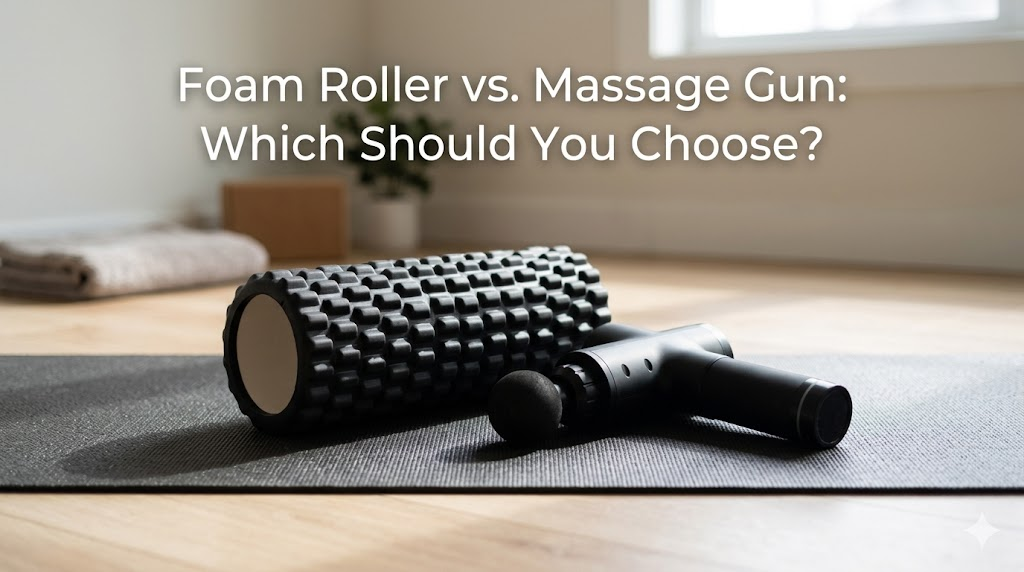
As physical therapists, we are constantly asked about the best tools for at-home muscle recovery. The two most popular contenders are always the traditional foam roller and the modern massage gun (like a TheraGun).
It is tempting to look for a clear “winner” between the two, but the truth is that they are simply different tools designed for different jobs. Depending on your body’s needs, the correct answer to “Which is best?” might actually be “Both!”
Here is a breakdown of how foam rollers and massage guns work, their unique benefits, and when you should choose one over the other.
The Effects of Foam Rolling
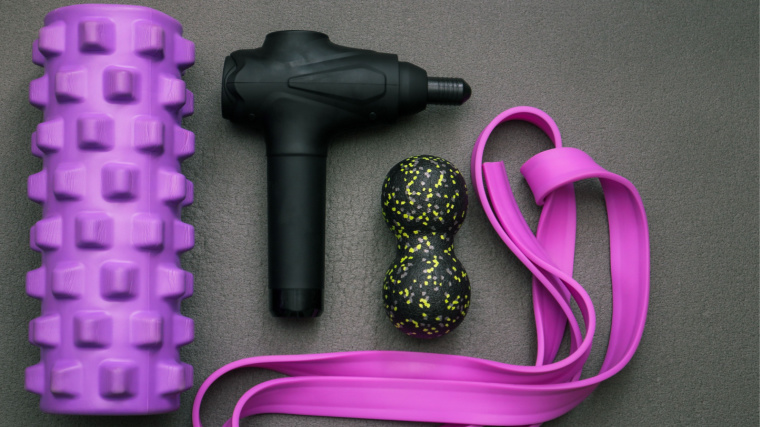
Foam rolling uses your own body weight and gravity to apply pressure across large muscle groups. As you roll, this pressure promotes myofascial release, loosens up tight muscles, and temporarily opens up your range of motion.+1
- The Pros: Foam rollers are highly affordable, require zero battery power, and allow you to target broad sections of muscle (like the IT band or the calves) that feel tight. They provide an effect similar to dynamic stretching but with more physical control.
- Best Used For: Improving overall mobility, releasing tight fascia, and addressing large muscle groups like the legs, back, and hips. They are excellent for prepping your joints before a workout or reducing Delayed Onset Muscle Soreness (DOMS) after a heavy session.+1
The Effects of Massage Guns
Massage guns utilize percussive therapy to deliver rapid bursts of pressure into the muscle tissue. Because they are powered by a motor, they do not rely on your body weight and can be easily modulated to your preferred intensity.
- The Pros: Massage guns allow for hyper-localized targeting. They are incredible at reaching deep tissue and alleviating specific “trigger points” or painful knots in hard-to-reach areas like the upper back, shoulders, or glutes. They are also highly portable, making them great for office workers who hold tension in specific spots throughout the day.+1
- Best Used For: Targeted, deep-tissue relief. If you have a stubborn knot in a very specific spot, the massage gun will break it up faster and more effectively than a broad foam roller.
Making Your Choice: Which is Better?
Choose the Massage Gun If:
- You need deep, localized relief for stubborn knots.
- You hold tension in hard-to-reach areas like the neck, shoulders, or glutes.
- You want a highly portable tool you can use while sitting at your desk.
Choose the Foam Roller If:
- You want to improve your overall flexibility and range of motion.
- You need to address broad, large muscle groups like the quads, hamstrings, or lats.
- You are looking for a budget-friendly tool to help manage post-workout soreness.
A Quick Note on Price: It’s important to acknowledge the price difference. While a good foam roller costs around $20, a reliable massage gun can range from $100 to over $300. If you need targeted trigger-point therapy but don’t have the budget for a massage gun, tools like a lacrosse ball or a Theracane can provide similar deep-tissue relief for a fraction of the cost!
Wrapping Up
Both foam rollers and massage guns have an important place in a well-rounded recovery routine. However, it is important to remember that while these self-massage tools provide excellent temporary relief, they aren’t a permanent fix for underlying physical issues.
If you are dealing with chronic aches and pains that won’t go away, it might be time to see a professional.
Need help with stubborn pain or mobility issues? The team at Petersen Physical Therapy has been serving the East Valley in Arizona for over 30 years. Contact us today to schedule your first appointment!