Smart vs. Traditional: The Home Security Resilience Roadmap
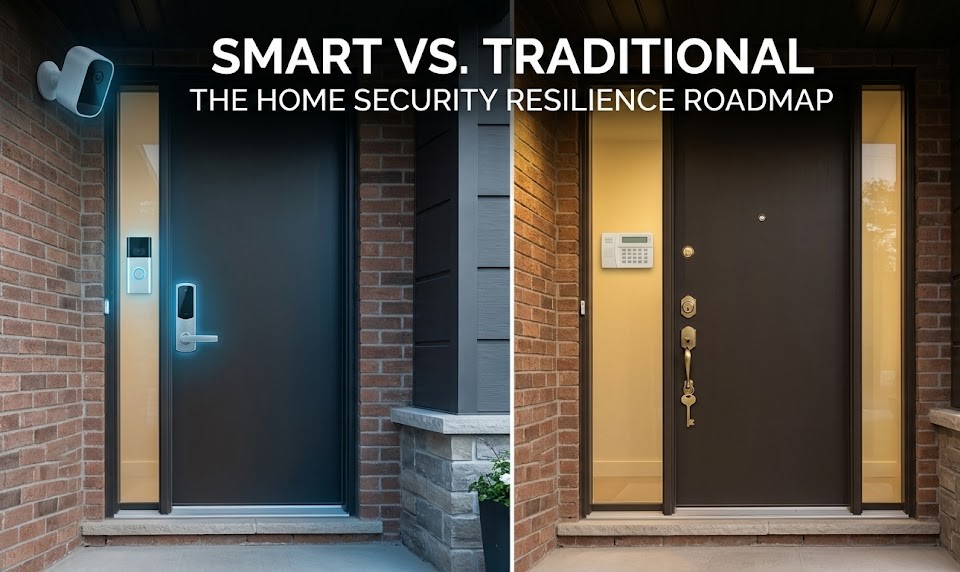
Is the threshold of your home has become the final frontier of the “analog vs. digital” debate. Whether you’re in Nassau or Suffolk County, choosing between a heavy-duty deadbolt and a biometric scanner isn’t just a tech choice—it’s a lifestyle calibration. As noted by the experts at Assured Locksmith, home security begins with trust, whether that trust is placed in a cloud server or a solid piece of brass.
The Security Efficacy Index ($SEI$)
In 2026, we evaluate locks based on the Security Efficacy Index. This formula balances Mechanical Strength ($M_s$) and Convenience ($C$) against the probability of Technical or Physical Failure ($F_p$):
$$SEI = \frac{M_s + C}{F_p + 1}$$
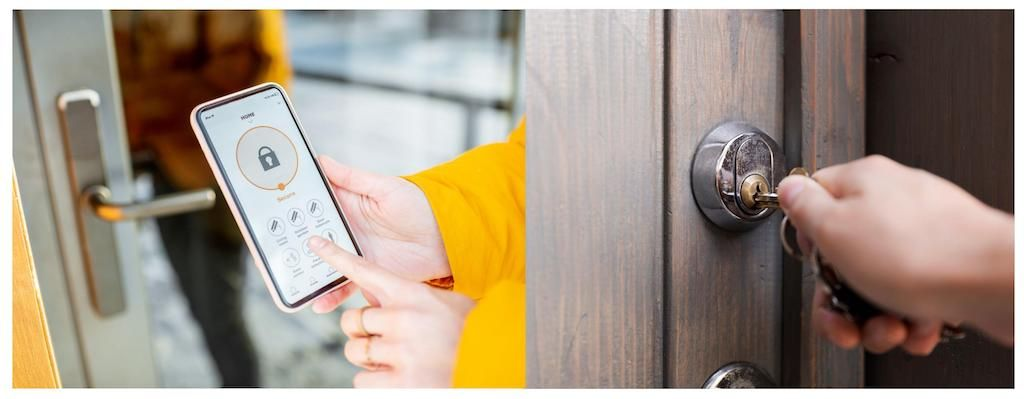
While a smart lock dramatically increases $C$ (convenience), it also slightly raises $F_p$ due to battery or Wi-Fi dependencies. A traditional lock keeps $F_p$ low through mechanical simplicity but offers zero $C$ when you’re three miles away and can’t remember if you locked the door.
Traditional Locks: The “Resilient Analog” Choice
Traditional locks—deadbolts, mortise, and lever handles—are the “muscle cars” of home security. They don’t need updates, they don’t care if the Wi-Fi is down, and they stay loyal to the physical key.
Deadbolts: The gold standard for external doors. They are virtually impossible to force open without heavy machinery.
Reliability: No batteries, no apps, no “cloud outages.”
Mechanical Integrity: Built deep into the door (Mortise locks), these provide a physical barrier that digital hacks cannot bypass.
Smart Locks: The “Convenience Bio-hack”
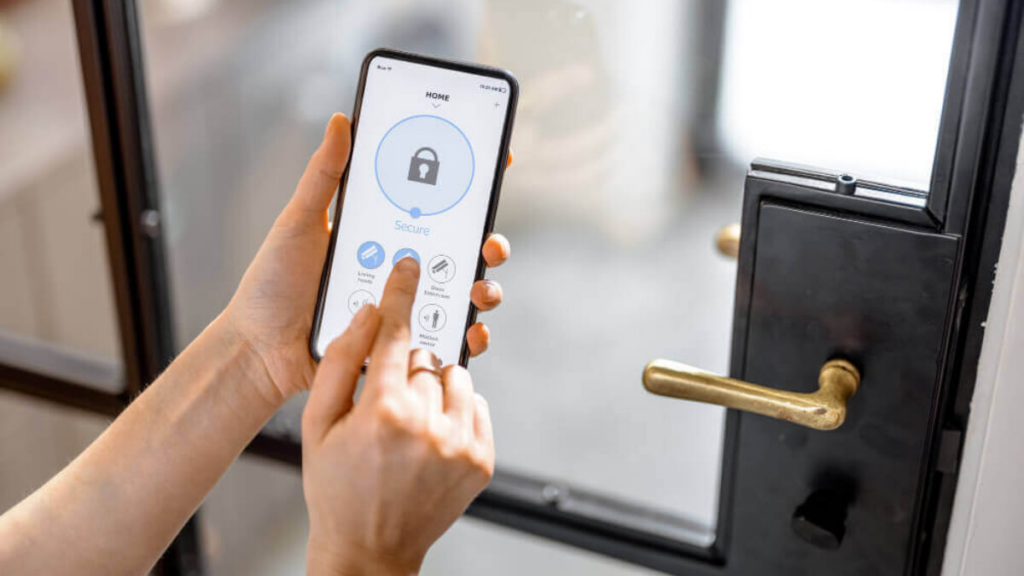
Smart locks are for the resident of 2026 who values data and remote management. They transform your door from a barrier into a managed gateway.
Type
Access Method
Resilience Benefit
Keypad
Numeric Code
No more “lost key” panic; perfect for guests.
Biometric
Fingerprint
Near-instant entry; reduces pocket clutter.
Wi-Fi/Bluetooth
Mobile App
Remote locking and entry logs for 24/7 tracking.
The Direct Truth: I’ll be your supportive but candid peer here: a smart lock is rarely “more secure” than a traditional one in terms of physical force. Its power lies in access control. If your deadbolt is Grade 1 but you leave a spare key under the mat, you’re less secure than a person with a “hackable” smart lock who never hides a key.
The Hybrid Compromise for 2026
For maximum resilience, many homeowners are now adopting a Hybrid Strategy:
Main Entry: Use a high-end Smart Lock (with a physical key override) for convenience and tracking.
Secondary/Interior: Use traditional mechanical locks for a “fail-safe” backup that requires no maintenance.
Expert Maintenance Tips:
Smart Care: Check battery levels every six months. In 2026, most locks support Matter/Thread protocols for better battery life and connectivity.
Traditional Care: Use a graphite-based lubricant once a year to keep the tumblers moving smoothly.