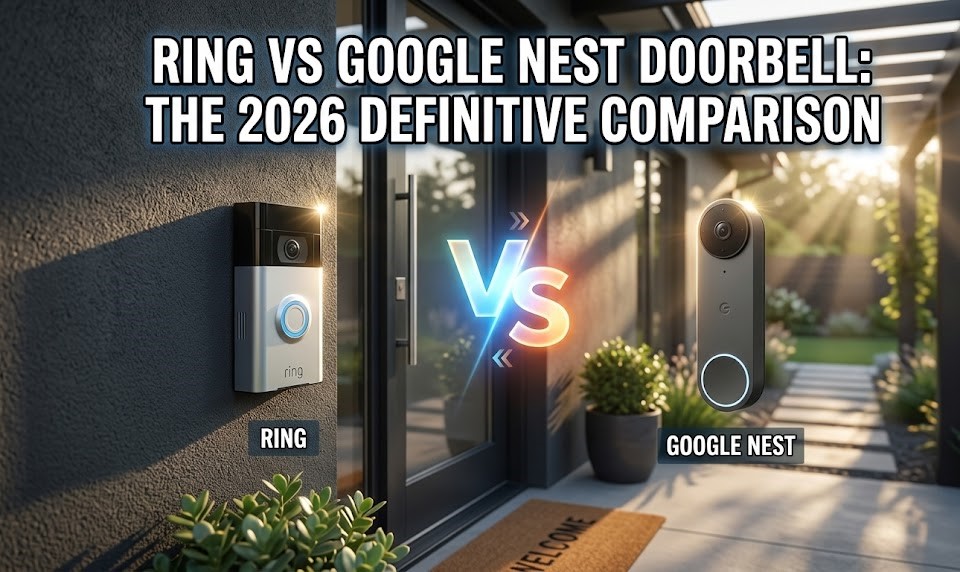
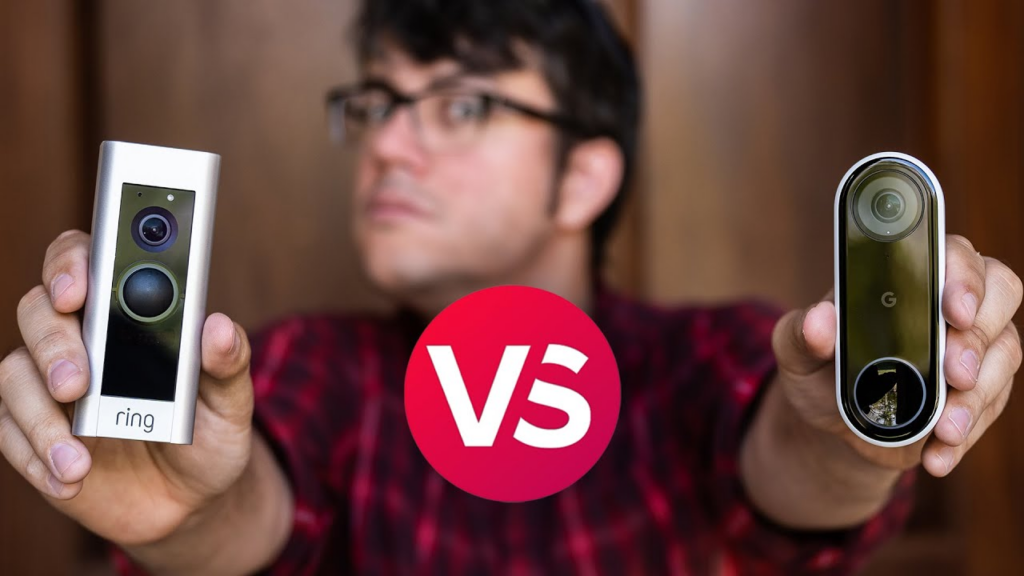
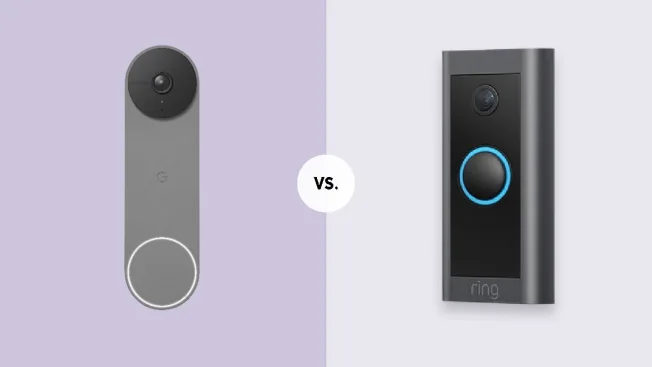
Ring vs Google Nest Doorbell: The 2026 Definitive Comparison
Selecting a video doorbell in 2026 is no longer just about seeing who is at the door; it is about choosing a sentinel for your digital ecosystem. Ring and Google Nest remain the titans of this space, but their philosophies have diverged significantly. While Ring focuses on high-resolution visibility and Amazon-backed convenience, Google Nest has pivoted toward sophisticated, on-device artificial intelligence and sleek integration.
Choosing between them can be daunting, but the “best” choice usually reveals itself once you look at your smartphone—if you’re an Alexa power user, Ring is your home base; if you live in Google Home, Nest is the natural evolution.
2026 Comparison Table: At a Glance
Feature
Ring Battery Doorbell Plus
Google Nest Doorbell (Battery)
Resolution
1536p Head-to-Toe
960p (HDR Optimized)
Field of View
150° Diagonal
145° Diagonal
Night Vision
Color Night Vision
HDR Infrared
AI Detection
Person & Package
Person, Package, Vehicle, Animal, Faces
Battery Life
3–6 Months
2–2.5 Months
Local Storage
None (Cloud Only)
1 Hour On-Device (Emergency)
Ecosystem
Amazon Alexa / Echo
Google Home / Nest Hub
Retail Price
~150 EUR
~180 EUR
Deep Dive: Beyond the Specs
1. Image Quality and the “Head-to-Toe” Standard
In 2026, resolution is only half the story. The Ring Battery Doorbell Plus leads with a 1536p resolution that allows for a “Head-to-Toe” view. This is critical for porch security, as it lets you see packages resting directly against your door. While the Google Nest Doorbell has a lower raw resolution (960p), it uses superior HDR processing to handle tricky lighting, such as a sunset behind a visitor, ensuring faces aren’t lost in the shadows.
2. The AI Edge: Edge Computing in 2026
Google’s dominance in machine learning shines here. The Nest Doorbell performs its AI processing locally on the device. This means it can distinguish between a neighbor (Familiar Faces), a stray cat, or a passing car without needing to ping the cloud first. Ring offers person and package detection, but for advanced “Bird’s Eye View” satellite-style motion tracking, you must upgrade to the Ring Video Doorbell Pro 2.
3. Privacy, Security, and “The Mother” of Smart Standards
In 2026, Matter compatibility is a major talking point. While both brands are working toward the Matter Smart Home Standard, they still favor their own silos.
Privacy: Google has simplified its privacy settings within the Google Home app, offering more transparency in European markets.
Data Sharing: Ring has faced historical scrutiny regarding data sharing with law enforcement. However, in 2026, they have implemented end-to-end encryption as a standard for all users. You can review the latest European Data Protection (GDPR) standards to see how these companies comply with modern privacy laws.
4. Connectivity and Power Options
Wi-Fi Bands: Ring models often support both 2.4GHz and 5GHz Wi-Fi, which is helpful if your router is far from the front door. Most Nest models stay on 2.4GHz for better range.
Solar Accessories: Both companies now offer solar charging mounts. A Ring Solar Charger can virtually eliminate the need to manually charge the battery if your door gets at least 3-4 hours of direct sunlight.
Subscription Costs: The Long-Term Investment
Plan Tier
Ring Protect
Google Nest Aware
Free Tier
Live View + Snapshots
Live View + 3h Event History
Basic Plan
3.99 EUR/mo (1 device)
6 EUR/mo (All devices)
Premium Plan
10 EUR/mo (Unlimited)
12 EUR/mo (60d History + Faces)
Pro-Tip: If you have more than three cameras, Google Nest Aware becomes more cost-effective because one subscription covers every camera in your home. Ring’s basic plan is cheaper if you only ever plan on owning the doorbell.
Conclusion
The battle between Ring and Google Nest in 2026 comes down to ecosystem loyalty versus hardware specifics.
Choose Ring if you prioritize a longer battery life (reducing the chore of charging to twice a year) and higher resolution for package monitoring. It is the gold standard for those already using Echo Show devices as their kitchen hubs.
Choose Google Nest if you want the smartest AI on the market. The ability to recognize specific family members and the inclusion of a 3-hour free event history makes it the more “set it and forget it” option for modern families. It feels more like a smart home assistant and less like a dedicated security tool.
Ultimately, both are world-class. However, if you are looking for a system with no monthly fees and local SD card storage, you might want to explore Consumer Reports’ Best Video Doorbells to look at brands like Eufy or Reolink.