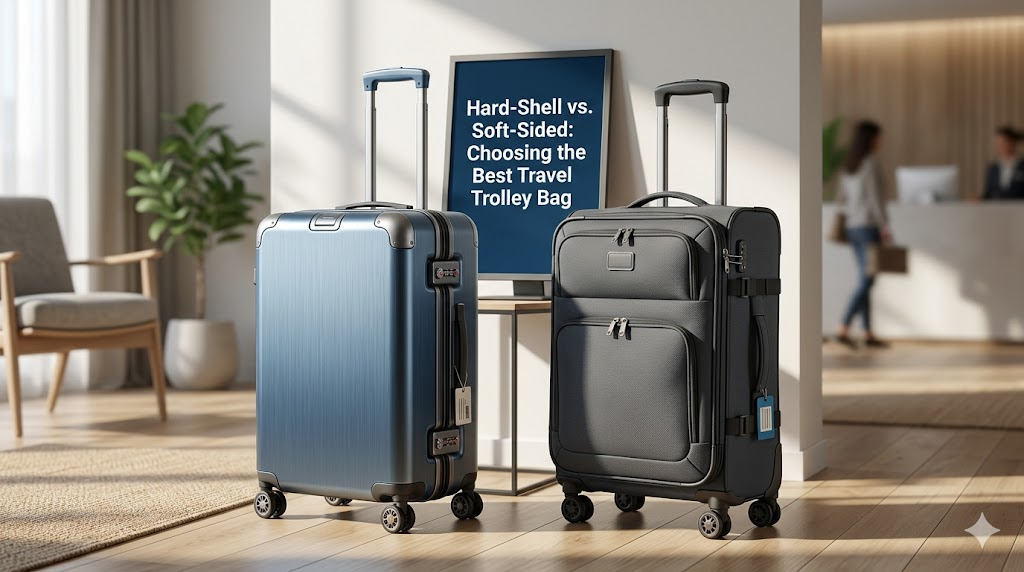
Many travellers wonder about the great debate: hard luggage vs. soft luggage. While both work exceptionally well, they serve very different travel habits and packing styles.
Some people require strong, rigid cases for fragile goods, while others prefer the flexibility of fabric bags with multiple pockets. This guide breaks down everything you need to know in plain terms so you can choose the perfect luggage for your next trip.
What is Hard-Shell Luggage?
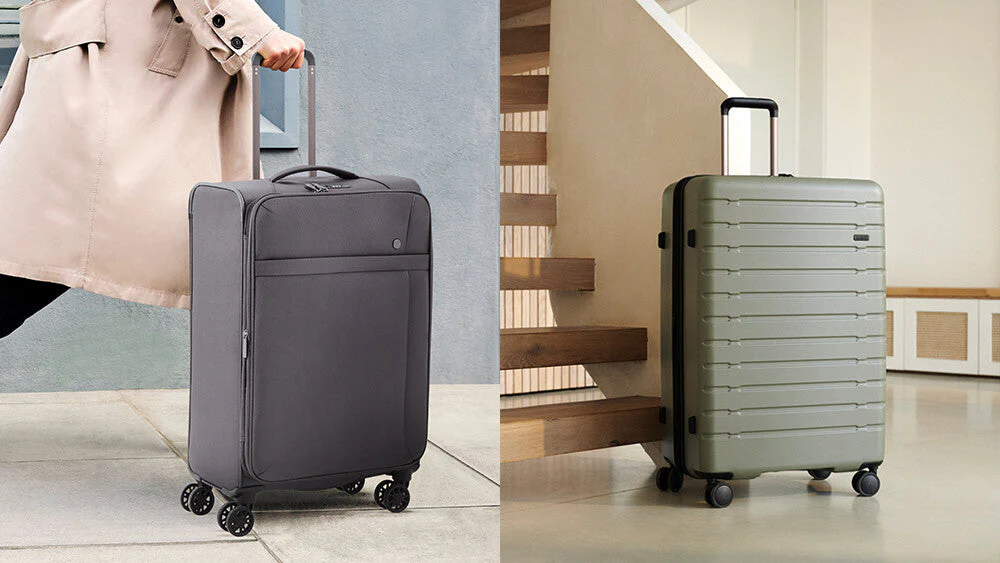
Hard-shell luggage features a firm exterior body typically made from durable materials like polycarbonate, ABS plastic, or aluminium. It retains its shape perfectly, even when bags are stacked or pushed around in transit. A hard-case trolley bag looks tidy and provides a neat, protective square space inside for your belongings.
Many travellers prefer it because the case does not bend or sink in. When you pull it through busy airports, it feels steady, secure, and effortless to maneuver.
Key Features of Hard-Shell Luggage:
- Strong, rigid outer shell
- Highly water-resistant
- Four-wheel “spinner” systems that glide smoothly
- Fixed interior frame
- Sleek, modern design aesthetics
Pros of Hard-Sided Luggage
Hard luggage trolley bags protect items much better than soft bags. It is the right choice for travellers who carry breakable items or goods that must not be crushed.
- Helps guard cameras, laptops, perfume, and glass items.
- Very steady on smooth floors because the rigid wheels hold their shape.
- Easy to clean, as the hard surface can simply be wiped down.
- Looks formal and professional, making it a popular choice for business travel.
Cons of Hard-Sided Luggage
- No stretch or “give” to squeeze in extra shirts or jackets.
- Prone to visible scratches and scuffs after multiple trips.
- Less flexible when trying to push it into tight overhead racks or car trunks.
- Repairs can be costly if the outer shell cracks.
What is Soft-Sided Luggage?
Soft-sided luggage uses highly durable fabric materials like polyester or nylon. These woven materials allow the bag to bend, press down, or expand when necessary. Many of the luggage trolley bags you see in stores fall into this category because they feel light and are simple to carry.
Soft bags work wonderfully for travellers who want exterior pockets, quick access to small items, or the ability to expand their bag to fit souvenirs on the return trip.
Key Features of Soft-Sided Luggage:
- Flexible body shape
- Multiple exterior and interior pockets
- Expandable zippers for extra capacity
- Absorbs small bumps without cracking
- Easier to store in narrow spaces
Pros of Soft-Sided Luggage
Soft bags suit people who prefer quick organization and accessibility during their trips.
- Abundant pockets for boarding passes, snacks, and chargers.
- Lighter baseline weight, which is excellent for frequent movers.
- Easy to push and squeeze into tight overhead cabin bins.
- Usually costs less than solid hard cases.
- Perfect for road trips, as the soft fabric can be wedged into the awkward corners of a car trunk.
Cons of Soft-Sided Luggage
- Less protection for fragile or breakable items.
- Fabric can absorb water if caught in heavy rain.
- Harder to clean if the material gets stained.
How to Choose: Hard vs. Soft Luggage Comparison
Here is a quick breakdown to match your travel style with the right bag type:
| Travel Need | Hard-Shell Luggage | Soft-Sided Luggage |
| Carrying Breakables | Strong choice | Not ideal |
| Need for Pockets | Very few (usually none on the outside) | Many exterior/interior pockets |
| Need for Expansion | No stretch | Expandable zippers available |
| Overall Aesthetic | Very formal and sleek | Slightly relaxed and sporty |
| Tight Storage Spaces | Hard to squeeze | Easy to press and adjust |
| Weather Protection | Excellent water control | Medium protection |
Other Factors to Consider Before Buying
Before making your final decision, keep these functional points in mind:
Pro Tips for Using Your Luggage
For Hard-Shell Luggage:
- Place fragile items directly in the centre of the suitcase, surrounded by soft clothes for padding.
- Use luggage covers to avoid cosmetic scratches during transit.
- Do not overfill the case, as this puts extreme pressure on the zippers and hinges.
- Wipe down the exterior after each trip to maintain its surface shine.
For Soft-Sided Luggage:
- Avoid dragging the fabric body on rough surfaces, stairs, or curbs.
- Use packing cubes to keep the bag’s structure firm and organized.
- Place heavier items (like shoes) near the bottom (by the wheels) to keep the bag balanced and prevent it from tipping over.
- Air out and dry the bag completely after a rainy trip to prevent mildew and smells.
Conclusion
Choosing between hard luggage and soft luggage ultimately depends on how you travel, what you pack, and how frequently you move from place to place. Hard-shell bags provide top-tier safety and stability for fragile goods and business travel. Soft-sided luggage is the perfect fit for people who want external pockets, lightweight mobility, and a bit of stretch when packing in a rush.
Both types work brilliantly when matched with the right travel habits. When shopping for the best travel trolley bags, take a moment to evaluate your journey style, storage needs, and comfort level. A well-picked bag from uppercase will ensure every trip is smoother, calmer, and more organized.