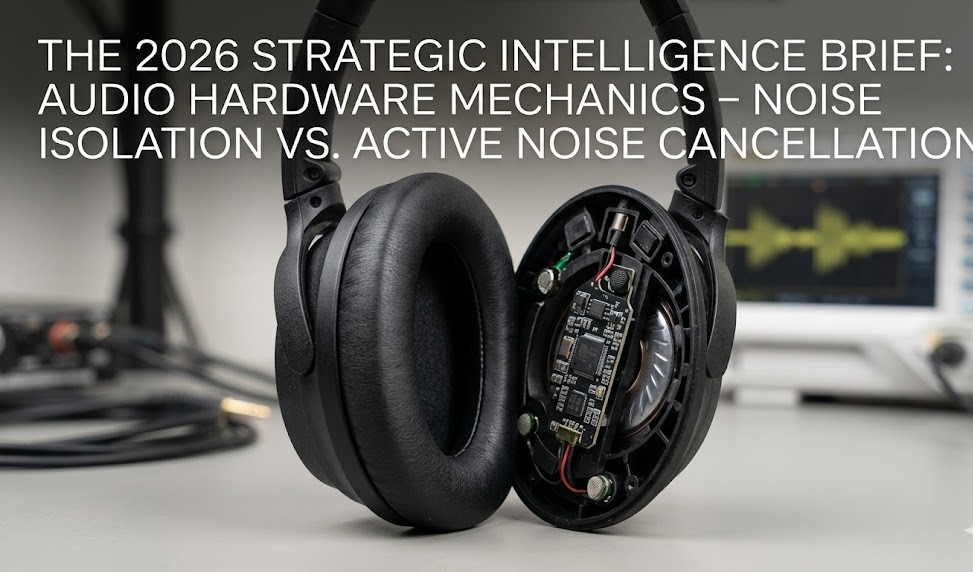
In the rapidly evolving personal audio hardware market of 2026, the distinction between Noise Isolation (Passive Noise Cancellation or PNC) and Active noise control (ANC) dictates the consumer experience, safety profiles, and production economics of earbuds and headphones. As the boundary between work, travel, and fitness blurs, manufacturers are transitioning from rigid single-function devices toward hybrid adaptive architectures. This intelligence brief deconstructs the physical mechanics, economic trade-offs, and strategic deployment of sound suppression technologies, highlighting the rise of modular hardware like the soundcore Aerofits 2 Pro.
1. Historical Context and Foundational Evolution
The quest for a quiet listening environment originally relied entirely on physical barriers. For decades, audiophiles utilized dense materials and deep-insertion ear tips to block external sound—a technique rooted in industrial hearing protection. The evolution of Active Noise Cancellation began in the aviation sector to protect pilots from engine drone before transitioning into the premium consumer market in the early 2000s, popularized largely by Bose. By 2026, ANC has moved from a luxury feature to a standard expectation. The current evolutionary leap involves the “Open-Ear” movement, a physiological pivot attempting to deliver the benefits of ANC without the physical fatigue and isolation associated with the traditional plugged ear canal.
2. Technical Mechanics and Structural Architecture
The mechanical divide between these two technologies is absolute: one is structural, the other is computational.
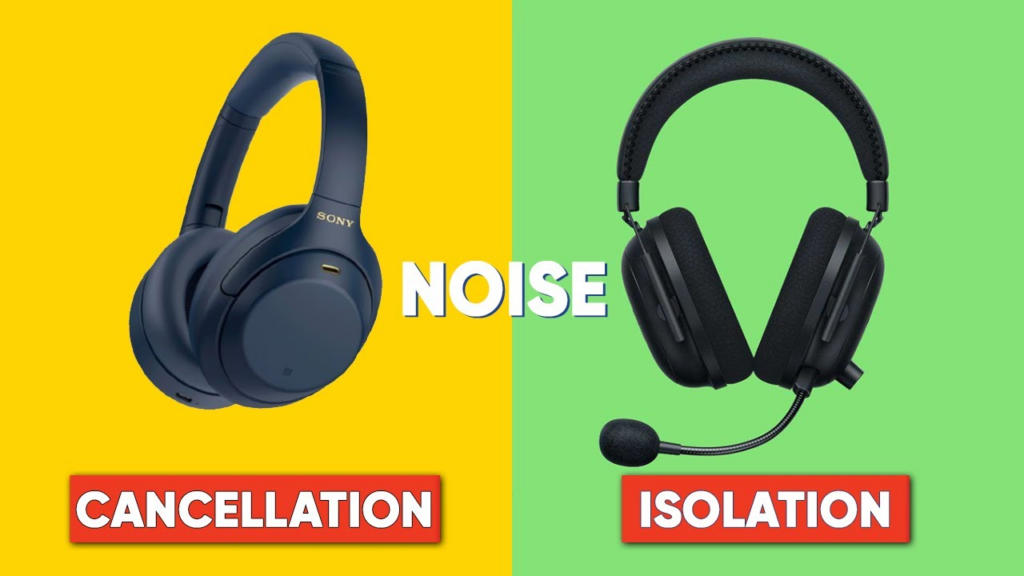
- Passive Noise Isolation (PNC): This relies on structural occlusion. It utilizes materials like memory foam or silicone to create an airtight seal within the ear canal, physically blocking mid-to-high frequency sound waves (like human chatter). It requires zero battery power but is highly dependent on a perfect anatomical fit, often causing pressure buildup and fatigue.
- Active Noise Cancellation (ANC): This relies on computational phase cancellation (destructive interference). Feedforward and feedback microphones sample external noise, and a digital signal processor (DSP) instantly generates an inverted sound wave (“anti-noise”). When the two waves collide, they cancel out. ANC is mechanically superior at neutralizing low-frequency, constant rumbles (like airplane engines) but requires constant battery draw and complex adaptive algorithms to function seamlessly without degrading audio fidelity.
3. Economic Impact and Global Market Dynamics
From a macroeconomic perspective, integrating ANC significantly alters the Capital Expenditure (CAPEX) for manufacturers and the retail price for consumers. Noise-isolating earbuds are highly cost-effective to produce, requiring only basic drivers and molded plastics. Conversely, ANC architecture requires sophisticated microprocessors, external microphones, and larger batteries to offset the power drain, pushing these devices into premium pricing tiers. The economic impact on the consumer is a higher upfront cost offset by “Reduced Listening Fatigue”—the ability to listen at lower volumes, protecting long-term hearing health and mitigating the potential future medical costs associated with noise-induced hearing loss.
4. Sociocultural and Behavioral Implications
The choice of noise suppression technology directly impacts human behavioral safety and environmental integration. The total occlusion caused by strict noise isolation or heavy ANC creates a “sensory bubble.” While ideal for deep focus in a chaotic office, this sensory deprivation is a critical safety hazard for outdoor fitness enthusiasts (runners, cyclists) who must maintain spatial awareness. This sociological tension has driven the explosive 2026 market demand for “Open-Ear” architecture. The modern consumer demands the ability to seamlessly toggle between total isolation for productivity and total transparency for safety, refusing to carry multiple devices for different phases of their day.
5. Regulatory, Ethical, and Health Frameworks
The deployment of personal audio devices is guided by health recommendations from bodies like the National Institute for Occupational Safety and Health (NIOSH). Ethically, manufacturers must navigate the fine line between providing an immersive experience and endangering the user. Heavy passive isolation can lead to ear canal irritation or infections if not properly ventilated, while poorly tuned ANC can induce motion sickness or an uncomfortable “eardrum vacuum” sensation due to mismatched sound pressure levels. The industry mandate for 2026 is “Adaptive Audio”—algorithms that automatically monitor ambient decibel levels and adjust ANC strength to protect the user’s situational awareness without requiring manual intervention.
6. Competitive Analysis and Strategic Positioning (Soundcore Case Study)
When analyzing the 2026 market, brands are competing aggressively on hybrid functionality. Soundcore’s strategic positioning with the Aerofits 2 Pro exemplifies this shift. Rather than forcing the consumer to choose between the safety of an open-ear design and the focus of an ANC design, the Aerofits 2 Pro utilizes a mechanical, adjustable ear-hook (Adjustable Ear Hook 2.0).
- By rotating the hook forward, the speaker sits outside the canal (Open-Ear Form) for fitness and safety.
- By rotating it backward, the bud rests in the concha (ANC Form) to deploy adaptive noise cancellation for office focus. This dual-form architecture allows Soundcore to strategically capture two entirely different consumer demographics (athletes and remote workers) with a single SKU, outmaneuvering competitors locked into rigid, single-use designs.
7. Predictive Modeling: The Future of Spatial Audio (2026–2030)
Predictive modeling for the remainder of the decade indicates the death of the “static” earbud. By 2030, ANC and Passive Isolation will merge completely into AI-driven “Selective Audio Transparency.” Future hardware will utilize edge computing to instantly identify and filter specific sound signatures in real-time. For example, the device will utilize deep-learning models to completely cancel out the drone of an airplane engine while simultaneously isolating and amplifying the specific vocal frequency of the flight attendant speaking to you. The physical hardware will act as an autonomous, intelligent gateway, dynamically curating the acoustic reality of the user based on context and environment.
Conclusion
The strategic debate between Noise Isolation and Active Noise Cancellation in 2026 is no longer binary; it is contextual. Passive isolation remains the reliable, battery-free foundation for blocking erratic high frequencies, while ANC provides the computational power necessary to neutralize the low-frequency drone of modern travel. The ultimate consumer victory in the current market is the advent of hybrid, mechanically adaptable architecture—such as the soundcore Aerofits 2 Pro—which bridges the gap between total sensory immersion and critical environmental awareness. Navigating the modern audio landscape requires understanding that the best technology is the one that dynamically adapts to the user’s immediate physical reality, ensuring safety, comfort, and uncompromised fidelity.