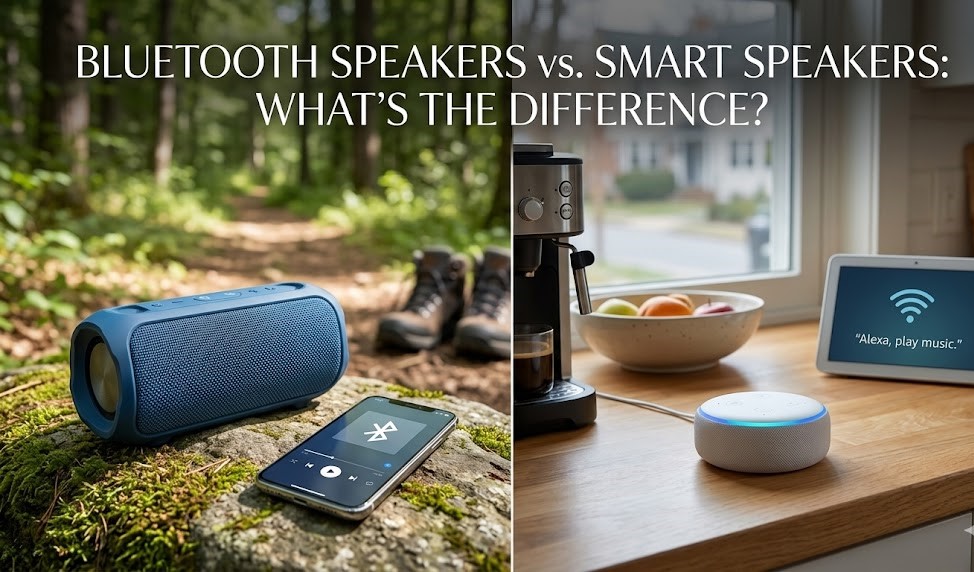
When deciding to buy new music speakers, there are two distinct options to pick from. Before you consider price, size, design, and functions, you need to decide whether you want Bluetooth speakers or smart speakers.
Clearly defining how the two differ can be confusing, especially since the best smart speakers often have Bluetooth, and some Bluetooth speakers can be considered smart. A handful of products can be described as both, but generally speaking, there are clear ways to differentiate one from the other. Understanding these differences will help you decide which type of speaker to buy.
Both of these product categories cover a broad price range, from two to three or even four figures in some cases, but the majority are priced between £50 to £300. Popular producers of Bluetooth speakers include JBL, Ultimate Ears, and Bang & Olufsen, while the smart speaker market mostly consists of products from Amazon, Apple, Sonos, and Google’s Nest division.
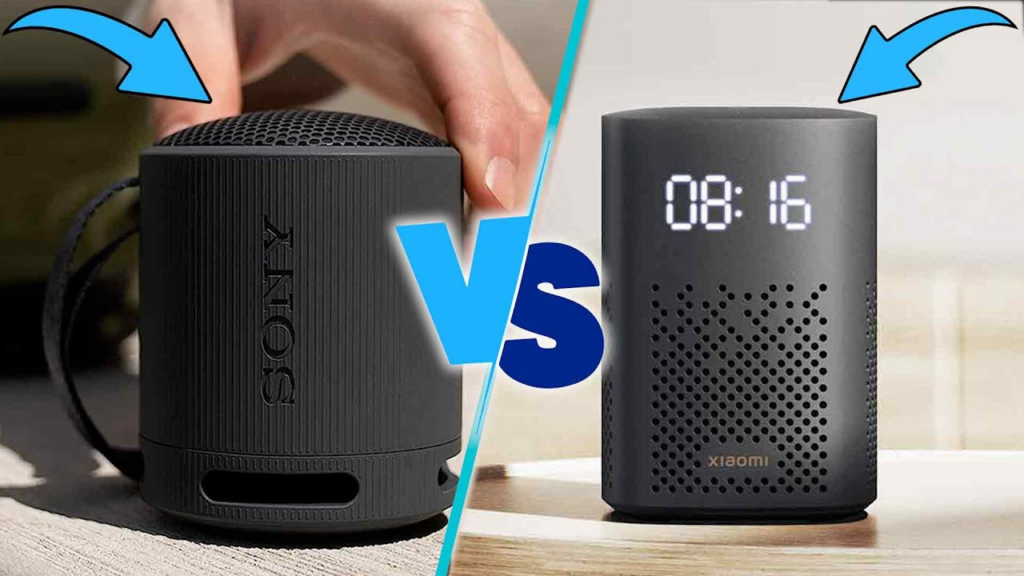
What’s the Difference?
In the simplest possible terms, smart speakers have an internet connection and a voice assistant (like Alexa, Siri, or Google Assistant), while Bluetooth speakers do not.
There are some exceptions to this rule, such as the Sonos Roam 2, which works as a Bluetooth speaker when running on battery power but becomes a smart speaker when plugged into the mains and connected to your Wi-Fi network.
One critical thing to consider when looking at Bluetooth speakers vs smart speakers is where they get their music from:
- Bluetooth Speakers: Connect directly to devices like smartphones, tablets, and computers using Bluetooth technology. They play whatever sound that device is producing. They aren’t connected to the internet and are controlled either by the input device or with their own physical buttons.
- Smart Speakers: Connect to the internet via your Wi-Fi network. They can be controlled by a smartphone or computer, but that device is simply telling the speaker where to fetch the music or radio station from, rather than sending the data directly to it. Smart speakers also feature a voice assistant controlled by a “wake word.”
Additionally, Bluetooth speakers are usually smaller, battery-powered, and highly portable. Smart speakers tend to be bigger and are almost always powered by the mains.
Price and Availability
Prices of Bluetooth speakers can vary significantly. At the very bottom of the market, you can pick up a small speaker for about £20, with options from reputable brands like Anker starting at the £26 mark. These won’t fill the room with powerful sound, but for a small bedroom or a picnic, they are great. Spending around £100 gets you a range of robust options from JBL and Ultimate Ears, with some even being waterproof. Battery life tends to be between 10 and 20 hours.
At the very top of the market, you’ll find stylish, high-end sound systems from Naim and Bowers & Wilkins that use Bluetooth as a connectivity option.
Standard Smart Speaker RRPs:
- Amazon Echo Dot (5th Gen): £54.99
- Google Nest Mini: £49.00
- Google Nest Audio: £89.99
- Apple HomePod Mini: £99.00
- Amazon Echo (Newest Gen): £132.92
- Apple HomePod (2nd Gen): £299.00
All of these speakers are mains powered and feature a voice assistant that requires a Wi-Fi connection to function. Pricier smart speakers include the Era 100 (£199) and Era 300 (£449) from Sonos.
Voice Assistants
Broadly speaking, smart speakers have voice assistants, and Bluetooth speakers do not. Amazon’s Alexa, Apple’s Siri, and Google Assistant all work in similar ways. They can answer questions, read out news headlines and weather forecasts, control smart home devices (like colour-changing light bulbs), manage shopping lists, set timers, make calls, and play music.
Once you know what a voice assistant can do, the smart speaker becomes far more than just a way to play music. Being able to set multiple hands-free timers is incredibly useful in the kitchen!
As outlined earlier, the Sonos Roam 2 (£179) and the Bang & Olufsen Beosound A1 (£259) are rare exceptions—battery-powered, portable Bluetooth speakers with voice assistants built right in.
Design and Usability
Smart speakers tend to be fairly small, ranging from the tennis ball-sized Amazon Echo Dot to the larger Apple HomePod.
Bluetooth speakers also fit into these general dimensions, but with extremes on both ends: some are pocket-sized, while others are massive, like the Bang & Olufsen A9 that stands a full 90cm (2ft 11in) tall and costs £3,200.
Both types of speakers usually feature a simple set of buttons or dials for controlling volume and playback. Very few models feature digital displays, save for smart displays like the Nest Hub and Echo Show.
Audio Quality
A larger speaker that houses more individual speaker drivers is, in most cases, going to produce a louder, clearer sound that is more powerful and of higher quality than a smaller speaker.
The Amazon Echo family demonstrates this perfectly. The smaller Echo Dot (5th gen) houses a single speaker driver, while the larger Echo (4th gen) contains three drivers (a woofer and two tweeters) to produce a much better sound.
Many smart speakers, including those from Amazon, Apple, and Google, can also be wirelessly paired to create a stereo setup, producing a wider field of sound with clearly defined left and right channels.
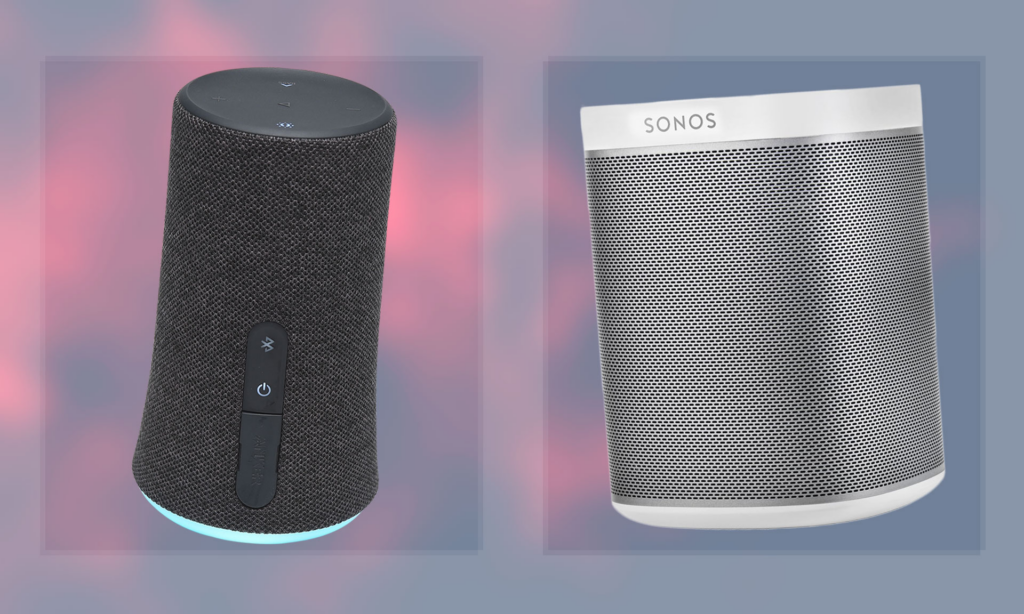
Which Should You Buy?
Picking between Bluetooth speakers and smart speakers mostly comes down to whether you want a voice assistant or not.
- Choose a Bluetooth Speaker if: You want a portable, battery-powered device to take to the park, the beach, or around the house, and you just want to seamlessly stream audio directly from your phone.
- Choose a Smart Speaker if: You want a voice assistant to answer questions, help with timers, control smart home devices, or act as a bedside alarm clock.
If you’re opting for a smart speaker, it is important to pick one that fits into a product ecosystem you’re already familiar with (e.g., iPhone users will benefit from a HomePod, while Android/Amazon customers may prefer an Echo or Google Nest). For those who want the absolute best of both worlds, hybrid systems from Sonos offer incredible flexibility.
About the AuthorAlistair Charlton has been a technology and automotive journalist since 2011. He specialises in smart home tech, from speakers and displays, to smart lighting, plugs, audio systems, security cameras and TV streaming devices. Alistair has tested hundreds of products during his career and currently writes for Wired, T3, Forbes, TechRadar, and Grand Designs.