
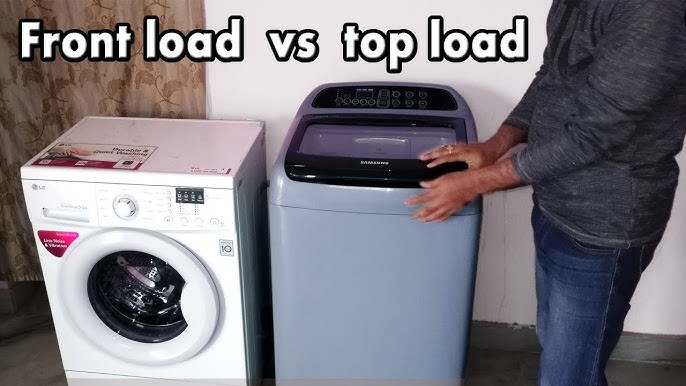
In the consumer appliance and domestic logistics sectors of 2026, the procurement of a Washing machine represents a fundamental household operational decision. The architectural divide between front-load and top-load configurations is not merely an aesthetic choice; it is a calculation of resource efficiency, ergonomic sustainability, and textile preservation. This intelligence brief deconstructs the mechanical engineering, economic trade-offs, and strategic deployment of both architectures to optimize household utility management.
Historical Context and Architectural Evolution
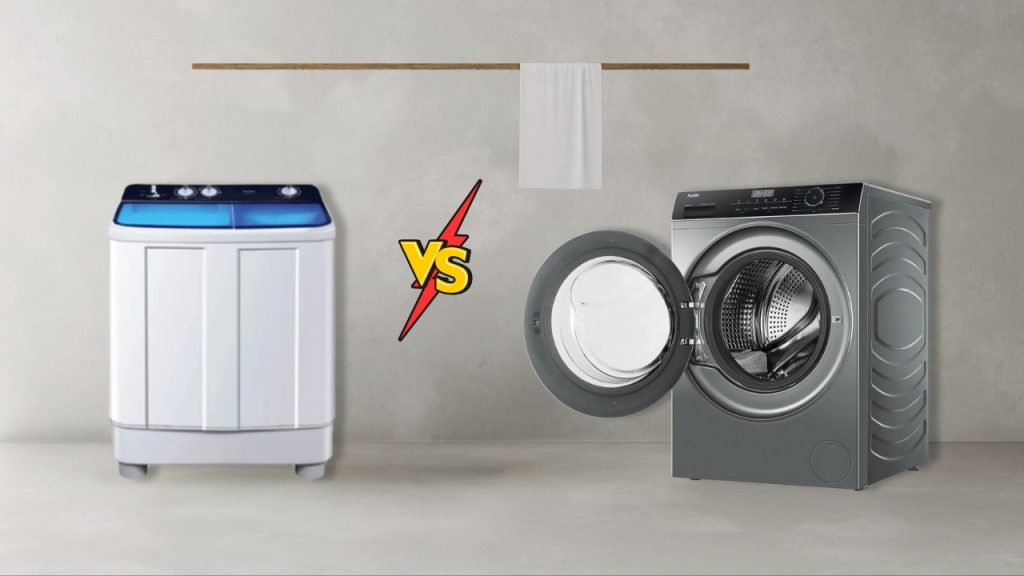
Historically, the North American and Asian markets were dominated by vertical-axis (top-load) machines, favored for their manufacturing simplicity and rapid wash cycles. Conversely, the European market heavily favored horizontal-axis (front-load) machines due to strict spatial constraints and historical energy costs. By 2026, global markets have highly integrated both configurations. Major Original Equipment Manufacturers (OEMs), such as Haier, actively engineer both product lines to satisfy bifurcated consumer demands, balancing the desire for low upfront costs against the necessity of long-term ecological and economic efficiency.
Technical Mechanics: The Front-Load Architecture
The front-load washing machine operates on a horizontal axis, utilizing gravity and a tumbling motion to clean garments.
- Operational Advantages: This mechanical design is vastly superior in cleaning efficacy. By continuously lifting and dropping clothes into a shallow pool of water, it forces detergent through the fabric with minimal friction. This gentle tumbling significantly reduces textile wear and tear. Furthermore, the absence of a central agitator inherently provides a larger drum capacity, optimizing the processing of heavy loads (e.g., bedding).
- Structural Vulnerabilities: The primary mechanical flaw is the reliance on a watertight rubber gasket on the front door. This airtight seal frequently retains moisture, creating a highly favorable microenvironment for mold and odor-causing bacteria if not subjected to rigorous maintenance. Additionally, the complex tumbling mechanics result in significantly longer cycle times.
Technical Mechanics: The Top-Load Architecture
The top-load washing machine operates on a vertical axis, requiring the drum to be entirely filled with water to suspend the garments.
- Operational Advantages: This architecture champions ergonomic accessibility; users can load and unload textiles without the physical strain of bending or kneeling. Mechanically, these units process laundry significantly faster than front-loaders. Because the lid does not require an airtight seal, the risk of residual moisture and bacterial odors is virtually eliminated, resulting in minimal upkeep.
- Structural Vulnerabilities: Traditional top-loaders utilize a central agitator pillar to create mechanical friction. This friction is notoriously harsh on garments, accelerating fabric degradation, stretching, and tangling. Furthermore, the vertical orientation fundamentally prohibits vertical stacking (washer on bottom, dryer on top), rendering them tactically unviable for high-density, small-footprint urban housing.
Economic Impact: CAPEX vs. OPEX
From a microeconomic perspective, the choice between these architectures is a classic evaluation of Capital Expenditure (CAPEX) versus Operational Expenditure (OPEX).
- Top-Load Economics: These units represent a low-CAPEX investment. They are cheaper to manufacture and cheaper to purchase. However, they carry a high OPEX burden. Because the drum must fill entirely with water, they consume vastly more municipal water and the electrical/gas energy required to heat that water, increasing long-term utility liabilities.
- Front-Load Economics: These units require a higher initial CAPEX. However, their reliance on gravity allows them to operate using a fraction of the water and detergent. Furthermore, their high-speed spin cycles extract significantly more moisture, reducing the secondary energy load required by the subsequent tumble dryer. Over a standard 10-year lifecycle, the OPEX savings frequently neutralize the initial purchase premium.
Sociocultural and Behavioral Implications
Behaviorally, the demographic deployment of these machines is highly predictable. Aging populations and individuals with musculoskeletal vulnerabilities heavily favor top-load machines to avoid lumbar strain. Conversely, environmentally conscious demographics and large, high-volume households (where capacity and utility savings are paramount) aggressively favor front-load configurations. Furthermore, the shift toward premium garment care has driven luxury consumers toward front-loaders to protect the lifecycle of expensive textiles.
Conclusion
The strategic verdict for 2026 is that the optimal washing machine architecture is dictated entirely by a household’s specific operational constraints. A front-load machine is the superior strategic investment for high-volume households seeking long-term Operating expense reductions, superior stain removal, and strict textile preservation. Conversely, a top-load machine remains the pragmatic choice for budget-conscious consumers prioritizing low initial Capital expenditure, rapid processing speed, and ergonomic convenience. Consumers must rigorously audit their spatial limitations, utility budgets, and physical capabilities before committing capital to either infrastructure.