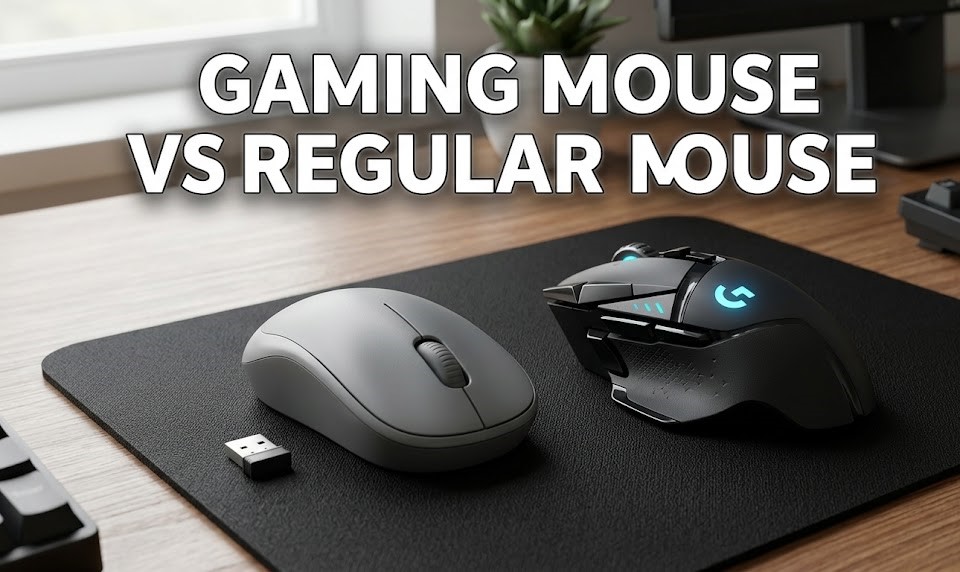
When comparing a gaming mouse vs a regular mouse, the biggest difference comes down to performance and purpose. A gaming mouse is designed for precision, speed, and responsiveness in fast-paced or competitive gameplay, while a regular mouse focuses on basic everyday tasks like browsing and office work.
Although both can move a cursor, they deliver very different experiences when accuracy and control matter. Here is a breakdown of what sets them apart and which one is right for you.
Design Purpose: Gaming vs. Everyday Use
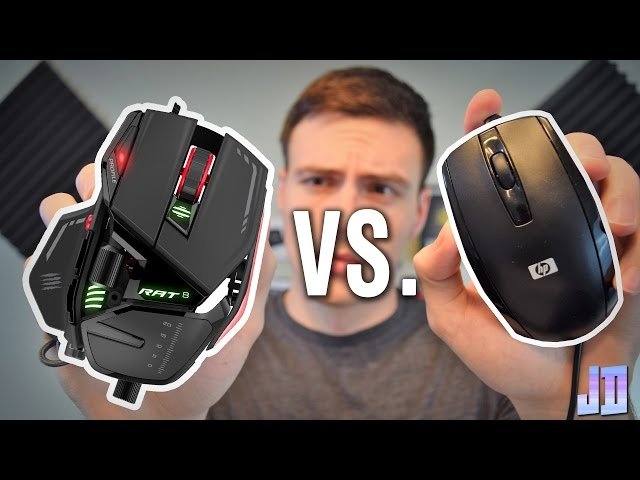
The fundamental difference between a gaming mouse and a regular Computer mouse lies in what each one is designed to do. While they may look similar on the surface, their goals are entirely different.
- Gaming Mouse: Built with high performance in mind. Its design prioritizes precision, fast response, and consistent tracking in situations where small movements and quick reactions matter. This is especially important in competitive games where control can directly affect the outcome of a match.
- Regular Mouse: Designed for everyday computer use. Tasks like web browsing, document editing, and basic navigation don’t require extreme precision or rapid input. As a result, regular mice focus more on simplicity and general comfort.
Key Performance Differences
While both perform the same basic function, their real-world performance feels very different. These differences become most noticeable in how each handles precision tracking, responsiveness, and user control.
1. Sensor Accuracy and Precision
One of the most noticeable differences is sensor accuracy. Gaming mice are equipped with high-precision Optical mouse sensors designed to track small, fast movements consistently. Regular mice are built for general use, so their sensors are optimized for basic movement rather than accuracy under rapid or complex motion.
2. Responsiveness and Input Lag
Responsiveness plays a major role in how a mouse feels. Gaming mice are explicitly designed to respond quickly to input, helping drastically reduce Input lag—the delay between physical movement and on-screen action. Regular mice are not optimized for high-speed input and may feel less responsive or “floaty” during intense activities.
3. Customization and Control
Gaming mice often allow users to adjust deep hardware settings, such as Dots per inch (DPI) and custom macro button behavior, enabling finer control based on personal preference. Regular mice usually offer limited or no customization, as they are intended to work out-of-the-box for basic tasks.
Comfort and Long-Term Use
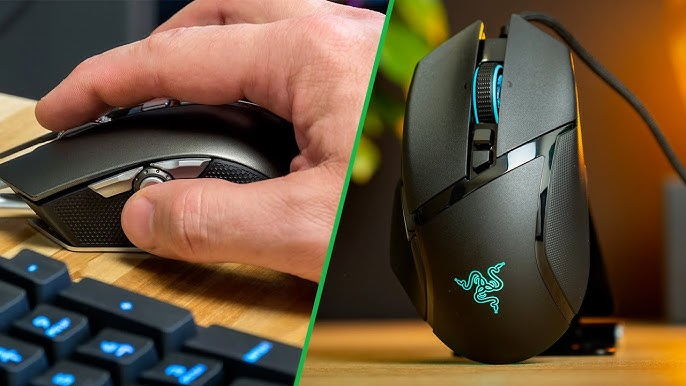
Comfort becomes increasingly important the longer you use your computer. A gaming mouse is typically designed with Ergonomics and long-term use in mind. Its shape, weight distribution, and button placement are optimized to reduce wrist fatigue during extended sessions, and many are tailored to specific hand grip styles.
A regular mouse, by comparison, is usually built for short, everyday tasks. While perfectly fine for brief browsing, it may not provide the same level of support during 8-hour workdays or long gaming sessions.
Which One Should You Choose?
Choosing between the two ultimately comes down to who you are and how you use your computer.
- Competitive Gamers: Benefit the most from a gaming mouse. In fast-paced games where accuracy, reaction time, and consistent control matter, the precision of a gaming mouse will noticeably improve the overall experience.
- Casual Gamers: While not strictly necessary, many still prefer a gaming mouse. Smoother tracking and better comfort make longer sessions much more enjoyable.
- Office and Everyday Users: A regular mouse is typically sufficient for tasks like typing or email. However, users who spend long hours at the computer may still appreciate the ergonomic benefits of a gaming mouse to prevent wrist strain.
- Mixed-Use Users: If you switch between work and gaming on the same PC, a gaming mouse is the perfect practical middle ground.