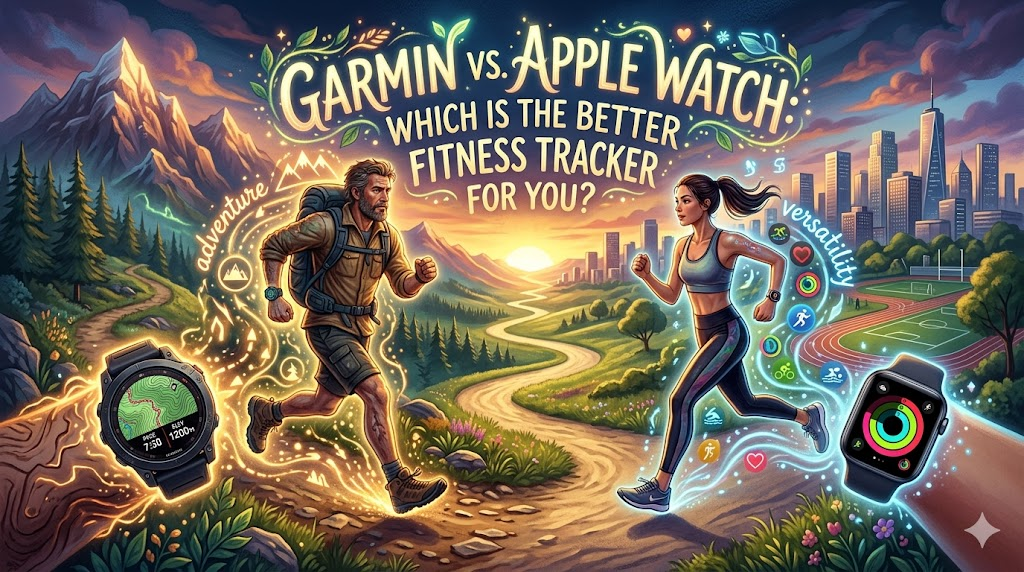
Are you Team Garmin or Team Apple Watch? It is the ultimate question for fitness enthusiasts looking to upgrade their wristwear.
When choosing between the two heavyweights of the wearable tech world, it is important to realize that there is no single “best” watch. Instead, it comes down to what you prioritize: do you want an extension of your smartphone on your wrist, or do you want a rugged device that provides the deepest possible performance metrics?
Here is a comprehensive breakdown of how Apple and Garmin compare across performance, battery life, and daily usability to help you make the right choice in 2026.
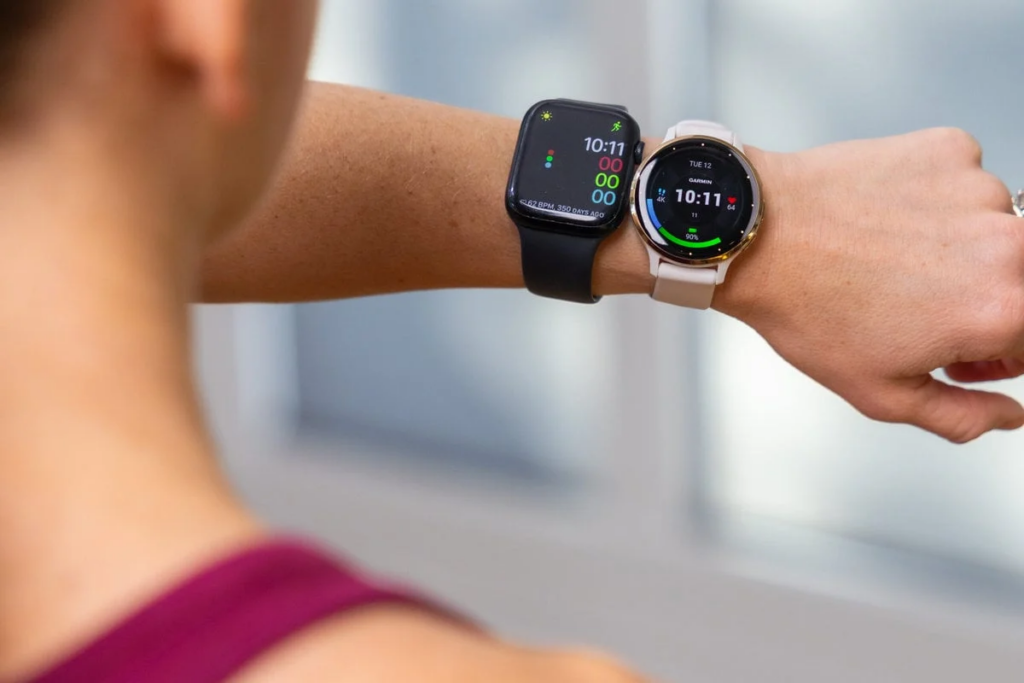
1. Performance and Fitness Tracking
- Garmin: Garmin devices essentially speak the language of training. They are loaded with deep, built-in metrics like Training Readiness, Body Battery, and HRV Status. If you are training for a triathlon or an ultramarathon, Garmin provides the structured workout modes and recovery data you need right out of the box.
- Apple: Apple has massively stepped up its fitness tracking, particularly with running metrics and cycling features. The newer models (like the Series 11 and Ultra 3) allow advanced exercisers to manually customize distance goals and interval sessions. However, Apple’s native ecosystem still leans slightly more toward general health and wellness rather than hardcore athletic training.
2. Battery Life and Charging
- Garmin: If you hate charging your devices, Garmin wins this category by a landslide. Multi-day (and even multi-week) battery life is standard. For example, the Garmin Instinct 3 can easily last 18 to 21 days on a single charge.
- Apple: Apple continues to improve its battery performance, but most users will still need to charge their watch daily. The Apple Watch Ultra 3 pushes the boundaries—lasting up to 42 hours without constant GPS usage—and features incredibly fast charging, but it still cannot touch Garmin’s endurance.
3. Navigation and GPS
- Garmin: For hikers, trail runners, and outdoor adventurers, Garmin is the gold standard. With multi-band GPS, breadcrumb routing, and topographic maps (on models like the Fenix and Epix), it is highly reliable even when you are deep in the wilderness.
- Apple: Apple handles city routes, neighborhood runs, and simple hikes beautifully. The GPS on the Ultra 3 is sharper than ever, but it still lacks the hyper-detailed, off-grid mapping capabilities that Garmin provides.
4. Daily Usability and Smart Features
Top Picks: Head-to-Head Comparison
The Premium Tier: Apple Watch Ultra 3 vs. Garmin Instinct 3
- Apple Watch Ultra 3: Features a massive, bright display, lightning-fast processing, and safety calling tools. It is the perfect hybrid for someone who wants serious fitness tracking and a device that seamlessly handles their daily emails and calls.
- Garmin Instinct 3 Solar: Boasts a sharp AMOLED screen, an incredibly powerful GPS, and deep readiness insights. If you regularly train in remote environments and only care about your athletic data, this is the watch for you.
The Everyday Tier: Apple Watch Series 11 vs. Garmin Venu 4
- Apple Watch Series 11: The ideal pick for anyone looking for an intuitive, easy-to-use smartwatch that tracks their daily health, sleep, and gym sessions while keeping them connected to their social and work life.
- Garmin Venu 4: Offers deeper workout tracking and an impressive two-week battery life, making it a fantastic choice for those who want a sleek daily watch but prefer Garmin’s data-heavy approach over Apple’s app-heavy approach.
The Final Verdict
If your primary goal is deep, distraction-free athletic data and multi-week battery life, buy a Garmin. If you want a beautiful, seamless smartwatch that keeps you connected to your life while still offering excellent fitness tracking, buy an Apple Watch.