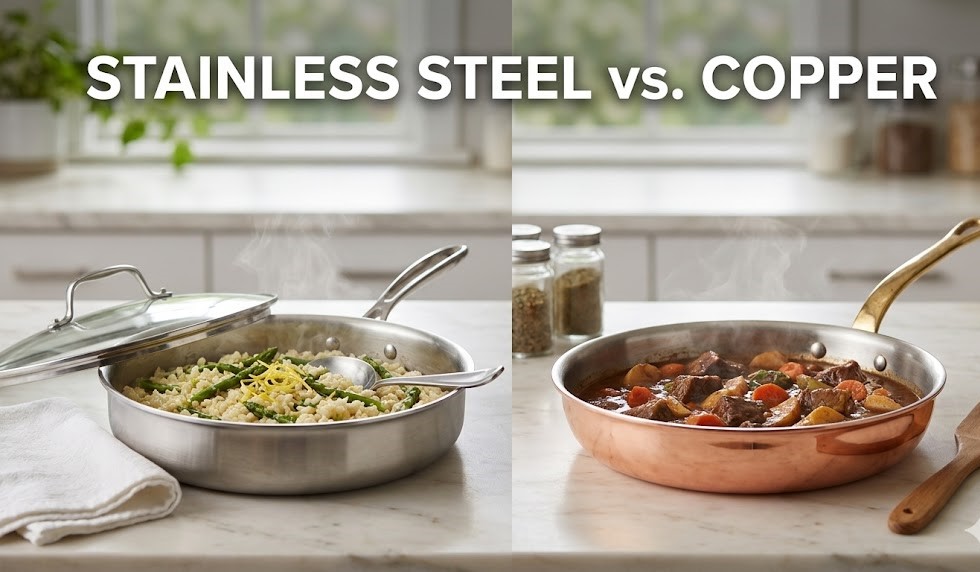
In the culinary arts and domestic kitchen infrastructure sectors, the selection of Cookware architecture fundamentally dictates thermal efficiency and operational control. For seasoned operators and professional chefs, the debate frequently centers on two apex materials: Stainless steel and Copper. This intelligence brief deconstructs the thermodynamic properties, maintenance liabilities, and strategic culinary deployment of both architectures to optimize kitchen asset allocation.
Technical Mechanics: Thermal Dynamics
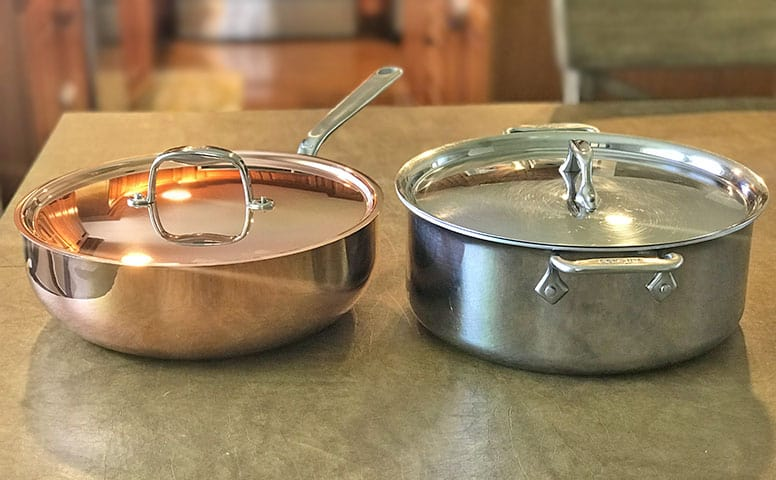
The primary operational difference between these two materials lies in their thermal conductivity (how efficiently they transfer heat) and their responsiveness (how quickly they react to temperature adjustments).
- The Copper Architecture: Copper possesses the highest thermal conductivity of any viable cookware material. It absorbs heat instantly and distributes it uniformly across the entire surface of the pan. More importantly, it features rapid thermal responsiveness; when the heat source is lowered, the pan cools almost immediately. This absolute temperature control makes it the mandatory choice for highly delicate operations, such as creating emulsions, thickening sauces, or executing precision sugar work (caramels).
- The Stainless Steel Architecture: Pure stainless steel is actually a poor conductor of heat. Therefore, high-quality stainless cookware is engineered as a “clad” or multi-ply system, featuring an internal core of aluminum or copper sandwiched between layers of steel. While it heats more slowly than pure copper, it retains that heat exceptionally well. Its non-reactive surface makes it ideal for high-heat searing, deglazing, and reducing highly acidic (tomato or citrus) sauces.
Operational Maintenance and Ergonomics
The lifecycle of these culinary assets is heavily dependent on the operator’s willingness to perform routine maintenance.
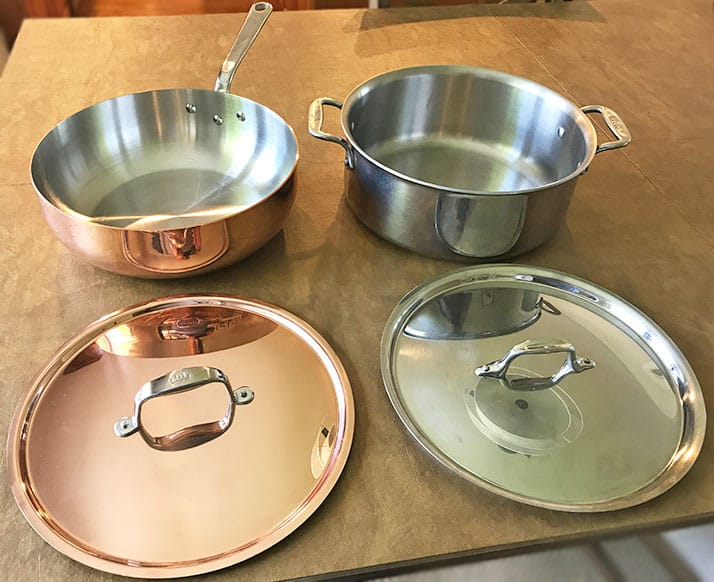
- Copper Maintenance: Copper is a relatively soft metal and highly susceptible to chemical tarnishing (oxidation) and physical scratching. It requires rigorous, manual maintenance. Copper must be hand-washed, immediately hand-dried to prevent water spotting, and routinely polished with specialized compounds to maintain its aesthetic luster.
- Stainless Steel Maintenance: Stainless steel is the ultimate low-maintenance, high-durability asset. It is highly resistant to scratching, warping, and corrosion. It can withstand aggressive cleaning protocols, including commercial dishwasher cycles and mild abrasives, making it the preferred workhorse in high-volume, professional environments.
Infrastructure Compatibility
As modern kitchen infrastructure shifts toward electromagnetic heating, the compatibility of legacy cookware must be audited.
- Induction Cooktops: Induction cooking requires ferromagnetic (magnetic) cookware to generate heat. Standard stainless steel is inherently magnetic and fully compatible. Pure copper, however, is non-ferromagnetic. To deploy copper on an induction stove, operators must purchase specialized, highly engineered lines (such as de Buyer’s Prima Matera) that feature an integrated magnetic base plate.
Economic Impact: Capital Expenditure (CAPEX)
From a procurement perspective, both materials represent a significant investment, but copper occupies the luxury pricing tier.
- Stainless Steel Economics: High-quality, multi-ply stainless steel pans generally range from $135 to $450 per unit. They offer an exceptionally high return on investment (ROI) due to their near-indestructible nature and low maintenance overhead.
- Copper Economics: Authentic, heavy-gauge copper cookware represents a massive CAPEX, with single units frequently starting at several hundred dollars and scaling up to $1,300. Strategic Warning: Consumers must be wary of “copper-colored” aluminum pans coated in ceramic, which flood the low-end market and provide zero actual thermodynamic benefits.
Conclusion
The strategic verdict for 2026 is that optimal kitchen infrastructure often requires a hybrid approach. Copper is a specialized precision tool; it should be deployed specifically for delicate tasks requiring absolute, rapid temperature control, provided the operator accepts the high capital cost and rigorous polishing requirements. Stainless steel is the unyielding foundational asset; it should form the bulk of the kitchen’s arsenal, deployed for high-heat searing, acidic reductions, and situations requiring maximum physical durability with minimal maintenance friction.